
I remember being with mum in this flat over two decades ago at this time of year. Back then there was a chandelier in the living room. It was covered in muck and attracting flies. I was early twenties and still trusting received information over my instincts, “balancing” as we do. Kids have to receive information. The world is potentially hazardous to somebody with no experience. They don’t get how or why roads are dangerous. They get told. They understand it to be true from what they’re told and witness the fast cars and then get hit by a football and extrapolate unconsciously. “The football hurt and it was softer and slower. My parents are right. Cars are not good things to be hit by.”
After a while in some thoughts people stop questioning the information and running it against their experience. They just funnel their expectation towards what they’ve been told is the way it works. I’m pretty diligent at mining these thoughts, but nobody can catch them all.”
“The chandelier is filthy – I think it’s attracting those flies,” I told mum. “Oh but darling it’s so difficult to get them cleaned.” Apparently you have to get a specialist who comes over to take them down, and hand clean all the bits of crystal individually. They take loads of time and costs loads of cash.
By the time I moved in, the living room chandelier had been taken down by mum and put in the attic. But there was still one in the bathroom, filthy. “You should clean that chandelier,” said Kitcat a few months ago, and I imagined the expensive skinny man in small glasses coming into the flat with white gloves and a huge price tag. “Maybe,” I said, and changed the subject.
I suddenly examined my assumptions today. Mum had told me it was a load of hassle to “get it cleaned”. “I’m going to clean it,” I thought. My days are spent working through a list of tasks I made. Camino taught me that a big thing can be broken up into lots of little things. Dad always used to say “Mony a mickle maks a muckle,” but I didn’t really understand that or internalise it like the cleaning of the chandelier being hard and by someone else.
I took apart the chandelier. That involved a little bit of electrical safety but I’d already been switching the breakers on and off all day, with Tristan holding my hand on WhatsApp as I (or more specifically he as I was just a conduit) changed a plug socket, changed a light fitting installed a Nest Thermostat and started to comprehend the electrics in this flat.
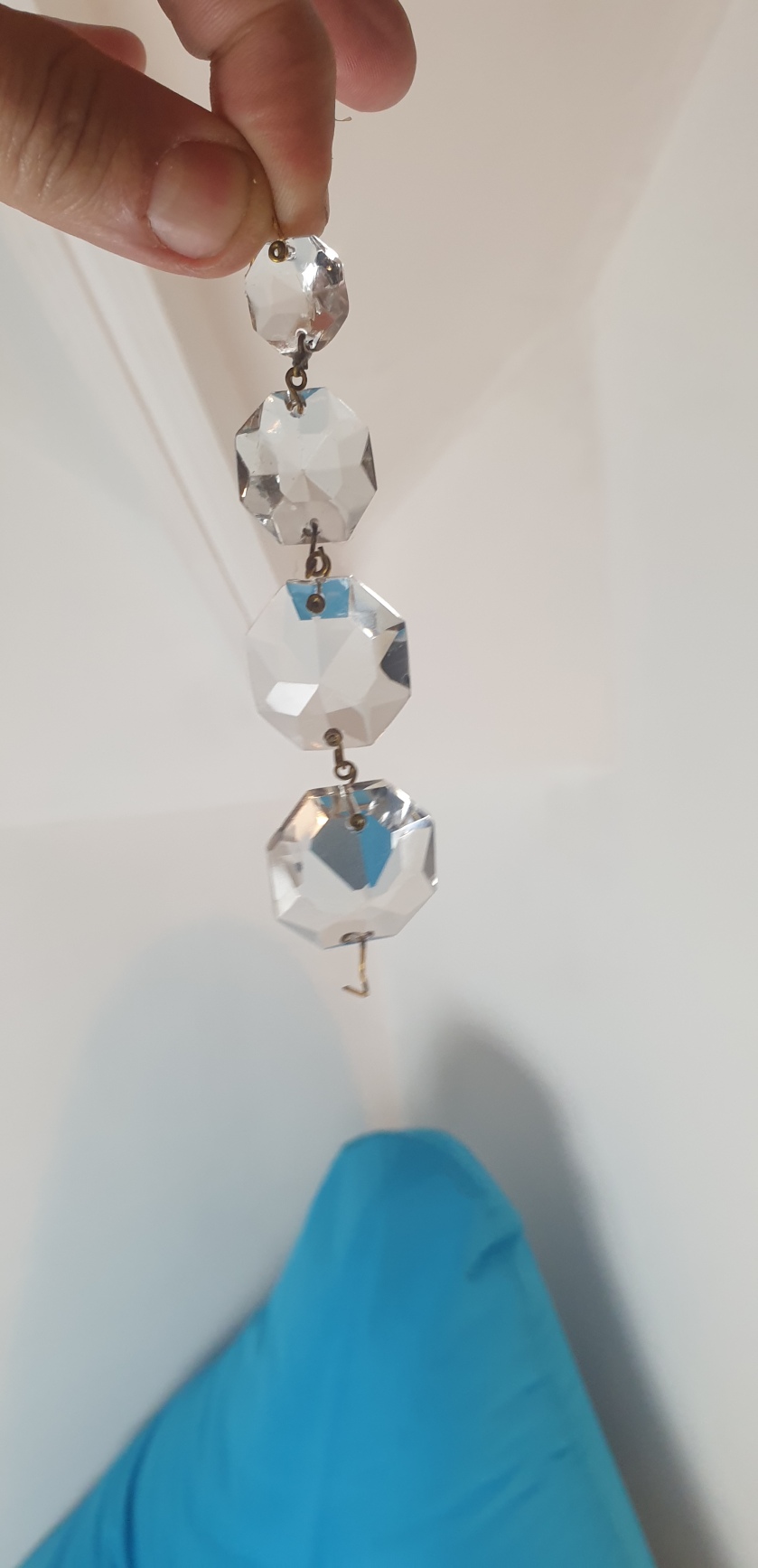
The pieces of individual crystal were beautiful but utterly swarming in filth. The brass had lost all shine. I looked at the pieces closely. The fixtures were brass. Even the ones embedded in the crystal. I had about half an hour of fighting with myself. Toothbrush and hours?
Reader, I put the lot in the dishwasher. Not the brass – I’ll brasso that tomorro
“You can’t put the chandelier in the dishwasher,” said a cartoon version of mum in my head as I did exactly that.
And it came out beautifully.
It’s so worth challenging our assumptions, on inconsequential matters like washing chandeliers, all the way up to fundamentals like “What constitutes value in other people”. I’m still chasing my assumptions around and all sorts of stuff keeps coming up that surprises me. We can call these received and unquestioned ideas prejudice in others when they don’t align with ours. But an attack on the assumption never helps. If someone had said “AL YOU IDIOT, JUST WASH IT IN THE DISHWASHER,” I would likely have defended myself. “Do you have chandeliers?” (YES = Well this one’s different. NO = So you don’t know what I know.) Parental wisdom is a huge part of how we filter stimulus. But we are all different from our parents and have different things we find easy and different things we find hard. Mum wouldn’t have enjoyed deconstructing the thing, or seeing the face of the brass under the brasso. I do. I did. I will. And so this disease gradually makes my flat more pleasant to be in…


 AlBarclay