Reflecting on Kumano-Kodo

I’m flying back home.

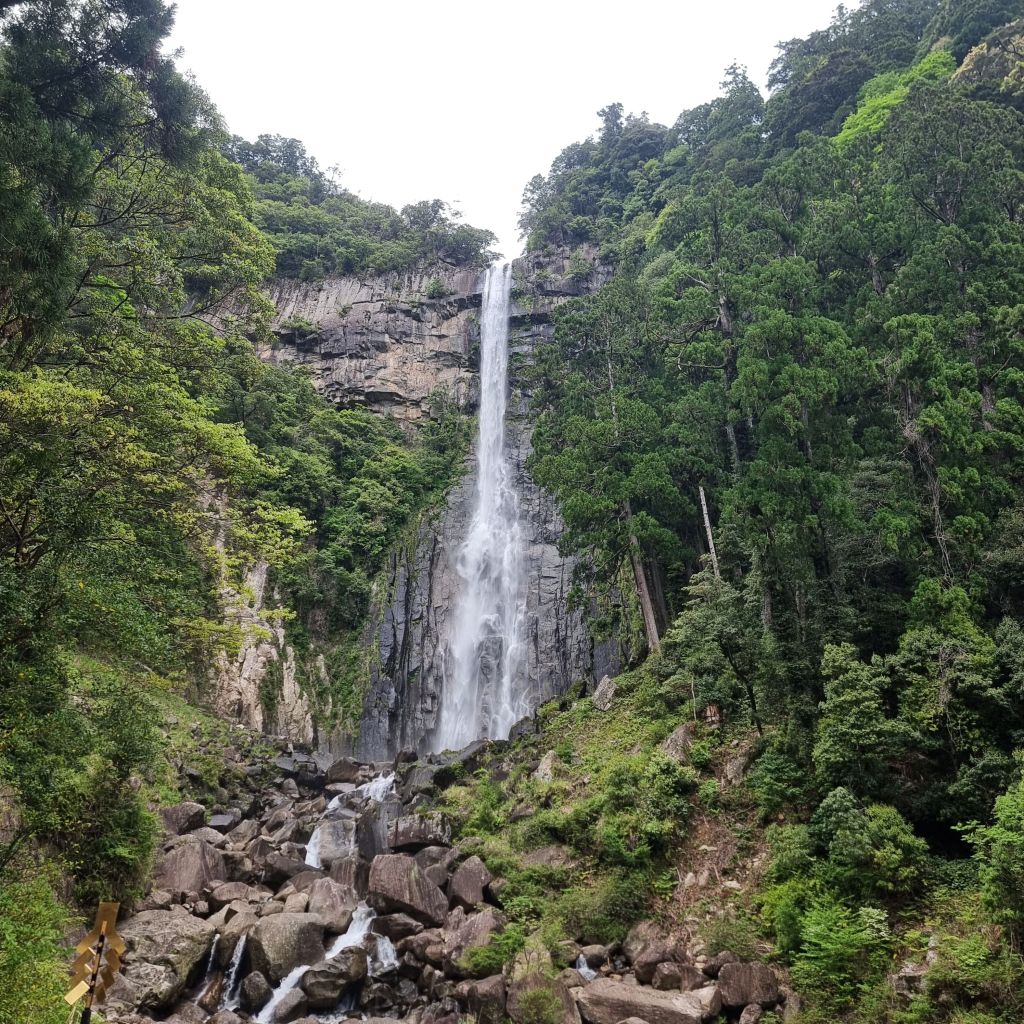
Kumano-Kodo is not just one path. Like Camino it is many, and the focal points are the shrines. For practicality they put more emphasis on the Past shrine in Hongu. Nachi Falls, the shrine at the end of most people’s route, is strong and gorgeous and much more ancient and resonant than Hongu. The Hongu shrine was destroyed in a flood and rebuilt, and you no longer have to wade through water to get there, losing an important part of the ritual. The Hayatama shrine for the future isn’t really on the walk at all anymore. Organised people get a boat. Mooks like me walk down a road and get the bus back.

You can’t really buy stuff on the route and you can’t easily book in many of the little villages. This is partly because Kumano Travel block buys much of the good accommodation so they can provide itineraries to anyone who is patient enough to work out their atrocious website and then put up with the fact you hear nothing from them for ages. I was in room 9 of 9 when I stayed at kiri-no-sato Takahara, but only 6 rooms were filled. I don’t think it’s the best system but it’s the one we’ve got. I rather haphazardly booked via booking dot com as I get 20% off and it was fine.

Knowing what I know now I would’ve done things very differently. If I couldn’t book a place to stay where I finished walking that meant I could start walking again in the morning I’d have booked a night in Hongu, most likely at Kumano Backpackers, where you get a cupboard for twenty quid. No availability there? Yunomine Onsen and J-Hoppers. Just a bit more to pay and a touch less practical to get to.

I was sleeping at the end for the first few days and the first bus out of Kii-katsuura is waaaay too late, at 8am.

I danced all over the place. It didn’t detract from my experience.

Koguchi and Chikatsuyu are the two places where they book out fast. You’ll struggle to get reliable last minute bookings. Both are perfectly achievable in the morning from Hongu. The buses are EARLY but great for that. My eventual route, which I described as Frankenstein’s monster of Kumano-Kodo was so incomprehensible to the lady who puts the dual pilgrim data in that she thought I had gone by coach and logged it as such for posterity. We know different. No point being vain. I’ve asked them to change it. But I didn’t do this for the certificate. I only got the stamps because I knew they’d let me bang the Taika drum. Which was a huge resonant moment on the life journey I’m currently experiencing.

Shinto is an excellent thing. It can be taken too far, and I’ve railed against Marie Kondo trying to persuade us that our socks have preferences. All religions can be taken too far and usually are. Humans are silly things. But generally Shinto is a powerful antidote to the thinking structures that we are using to burn ourselves out of functional civilisation. The group is more important than the individual. Screw you Ayn Rand. Nature is powerful and to be respected. Even if you eat stewed blue whale eyeballs and river dolphin nose. Don’t expect the crazy kami to do you a favour. You can go clap and hope they help out but you know they’ve got their own stuff going on and the chances are they aren’t particularly concerned about your granny’s angina. But they might be. It’s a benign and peaceable way of thought and it means there are some seriously old and well cared for trees in the shrines. The beauty of the natural world is preserved because of the understanding that we are not the most important thing on this planet even if we sometimes forget that.

I stayed in some incredible places, some more practical than others. Kiri-no-sato and Kumano Winery Guest House were the only two that I walked to and then departed from without having to get a bus to the trail head. My last two nights.

Wakatake gave me my best Japanese meal, but I had to get a taxi to Shingu the next morning to make sure I caught the 7:10 bus to Koguchi. WhyKumano was a friendly cupboard and good for Hayatama Taisha but not much good for the trail with that damn 8am first bus. Myoho mountain lodge? God it was beautiful. But way out.

Kumano Backpackers, cheap and cheerful and friendly. The café never opens, but they gave me a peanut butter and jelly sandwich kit. I knew how to operate it despite being English. And a banana and a yogurt. Nice people. At J-Hoppers they know you’re only passing through and are perfectly happy to let that show. They’ve got amazing onsen that you can make private though, so it’s worth the studied indifference. And the owner is a lovely family man. He’s just employed gap year travellers to help cook and they slump around scowling at you.

I’ll come back to these trails, and walk a different route, in this or another lifetime. It’s a powerful part of the world and helpful for me when I’m trying to get back into some form of fitness. The time commitment is low enough that if you’re needing to do some reconstruction I recommend it heartily.

The paths are long and rarely feel dangerous. A few landslidey bits and big drops but nothing you can’t manage. People occasionally get killed. A friend of Mary and Andy from Melbourne went off the edge and died while letting someone pass. There are posts hammered right in the middle of flights of steps and pathways that appear to have been designed to ensure paralysis instead of just a wet bum if anyone is unlucky enough to slip when passing them and go over backwards. They really need to rethink that. They are an awful awful idea, and plastic to boot. What are they even for?
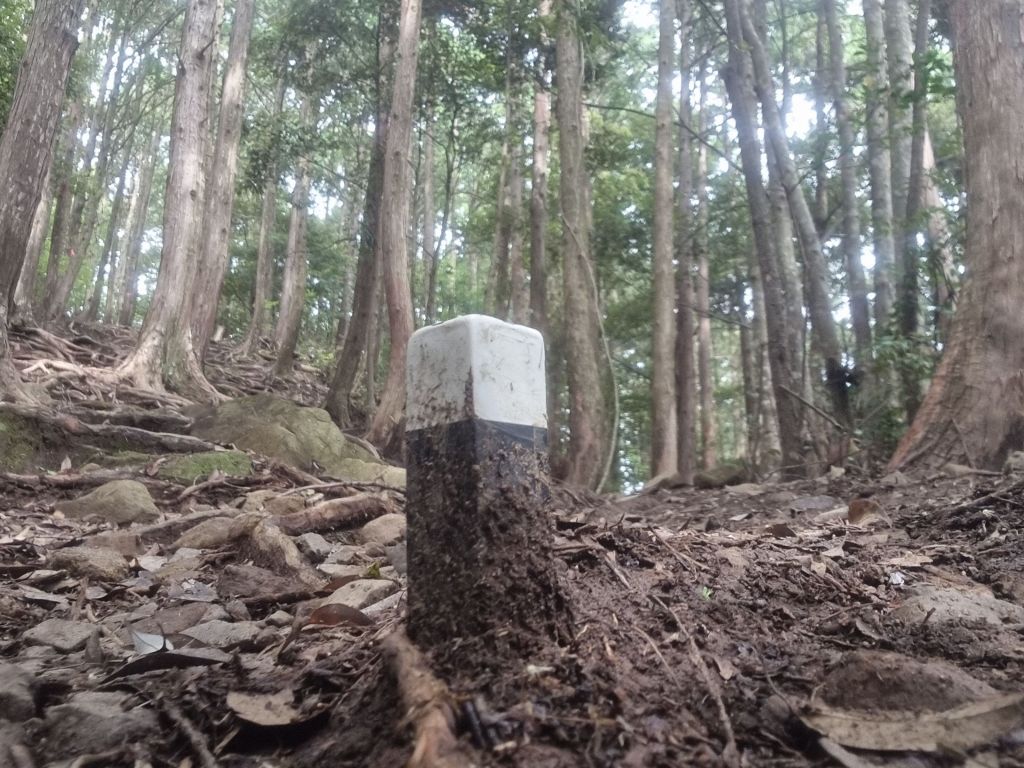
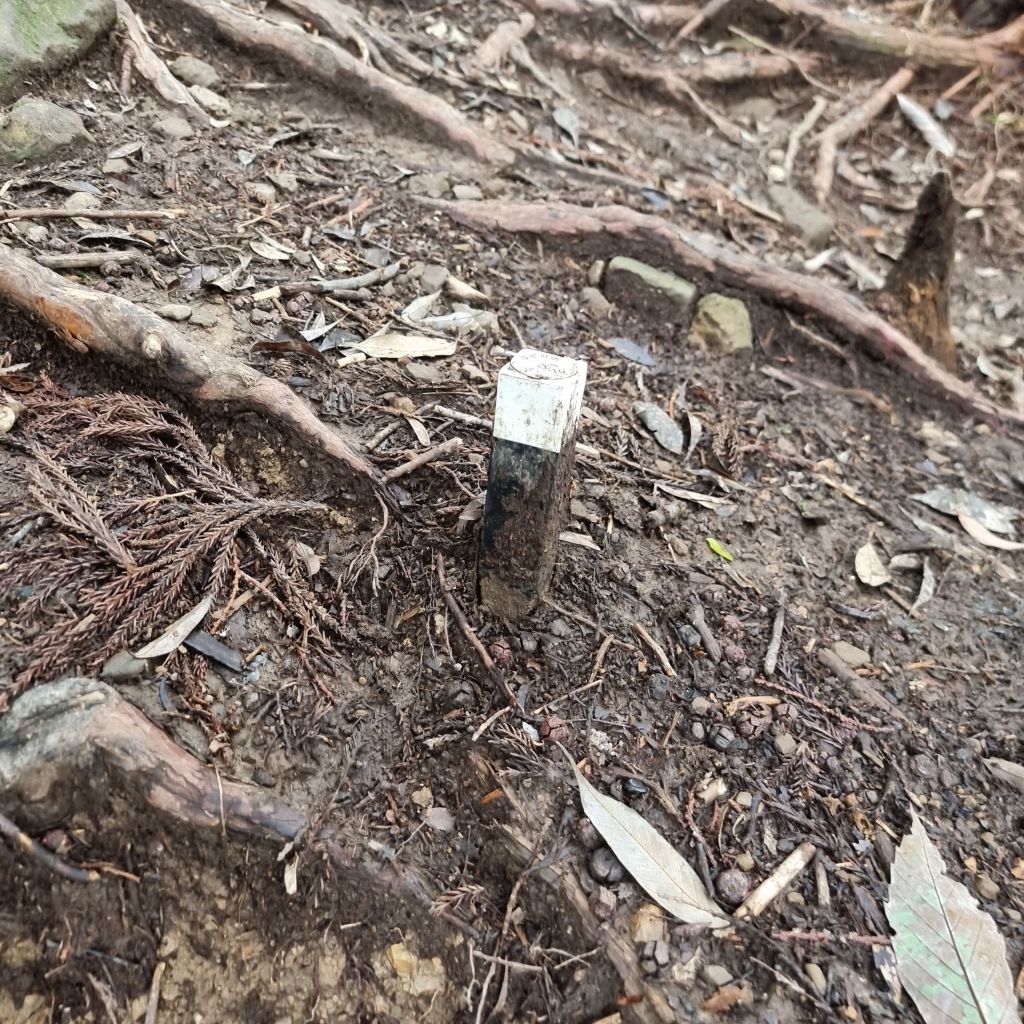
The Nakahechi route is busy enough that you aren’t going to be left there all night with a broken leg unless you start really really late. But there’s solitude to be found. Pilgrimages are not about being on your own though. Seeing and sharing information with others on the route, walking with strangers a while, sharing food and stories – lots of us had to read The Canterbury Tales at school. That’s part of it. This walk is much less busy than the Camino Frances, because it is harder and less well served by coffee shops and people with guest houses. Many more people bus through hard sections. I only don’t because I like seeing things through.

I saw it through and loved it and the bits I prepared were largely better than the bits I did by instinct last minute. Damn. I might have learned something.
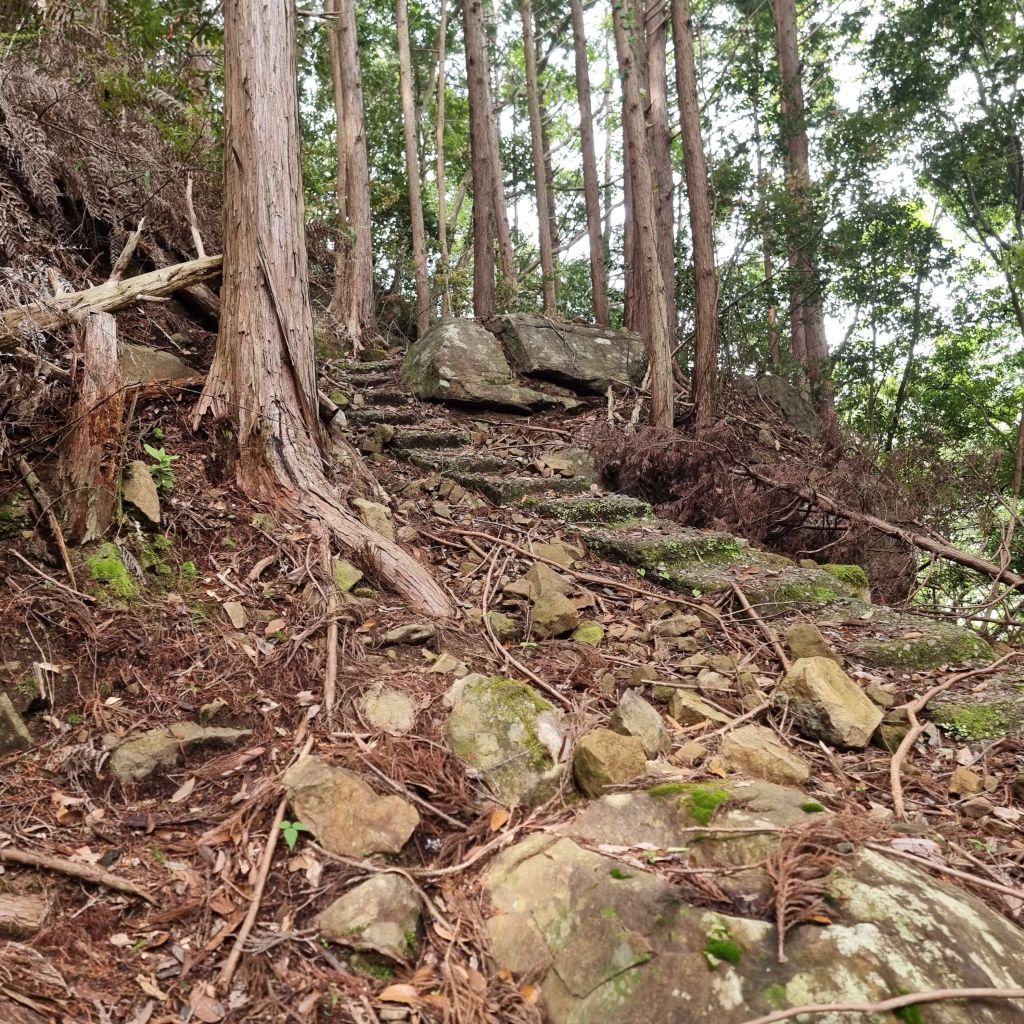
Takahara to Kumano Winery Guest House

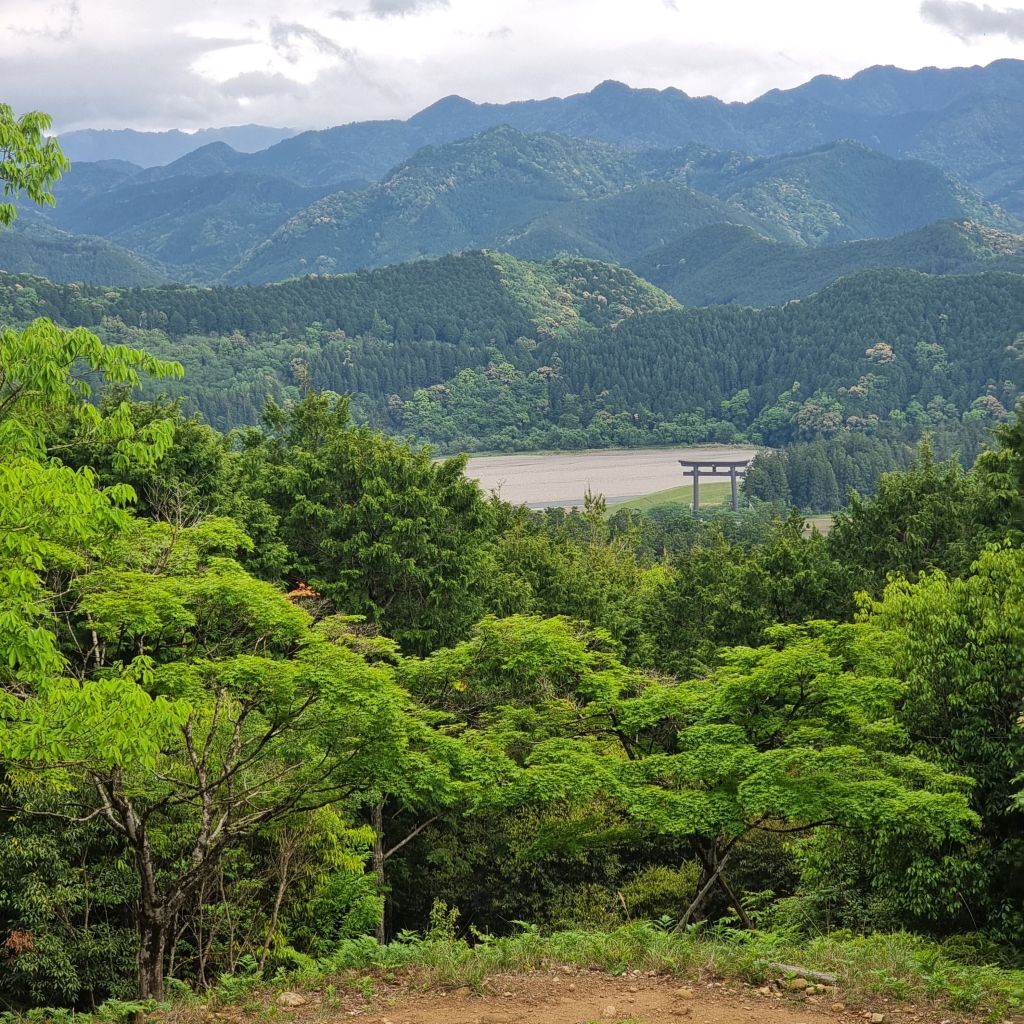
Down to the bottom of the Nakahechi Route and at the torii gate I did some ritual with a bunch of red sand I had brought from a place of power in the Neom desert. Then my last day of walking is towards an excellent meal. I’ve taken my proclivities into consideration when booking this whole experience. I’ve booked my last night at The Kumano Winery Guest House, where the meal is going to cost twice as much as the room. Dinner is at 6.30.

To get there I’m going to have to walk up the Shiomi-Toge mountain pass. It’s 2pm when I finish faffing at the start of Kumano-Kodo and it’s gonna be another 3 hours minimum to get up the pass, and that’s if I don’t get lost. This route is not well travelled, nor is it well signposted. All I’ve got is a zoomed out Japanese map which Google Translate tells me says “The path through cedar wood is rough and steep. If you can’t walk take road.”

I want to walk. I’m in my stride now. I set off and the first thing that surprises me is that as soon as I get off the road I’m cobweb breaking. Nobody has been up here for a while.

Quietly hoping I’m going the right way, as the regular signs I’ve grown used to are not in evidence here, I start up the hill. There’s peace here. There also might be bears.

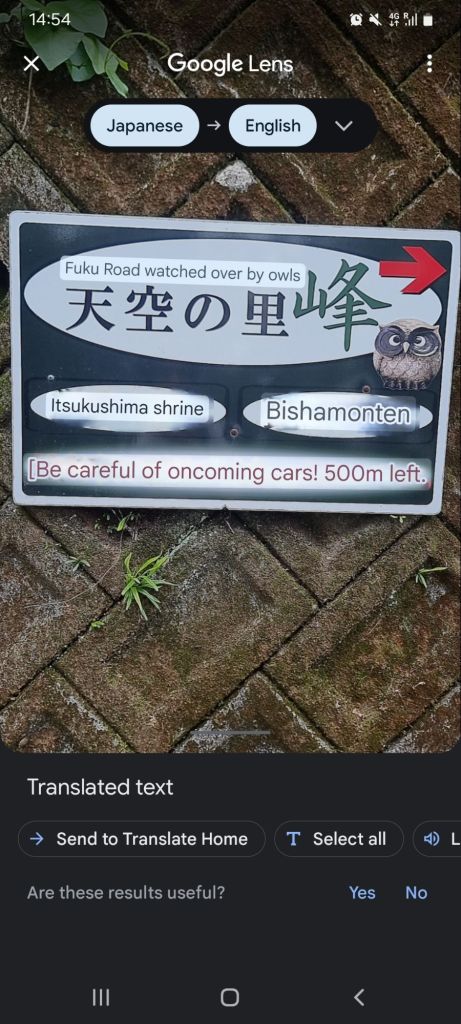
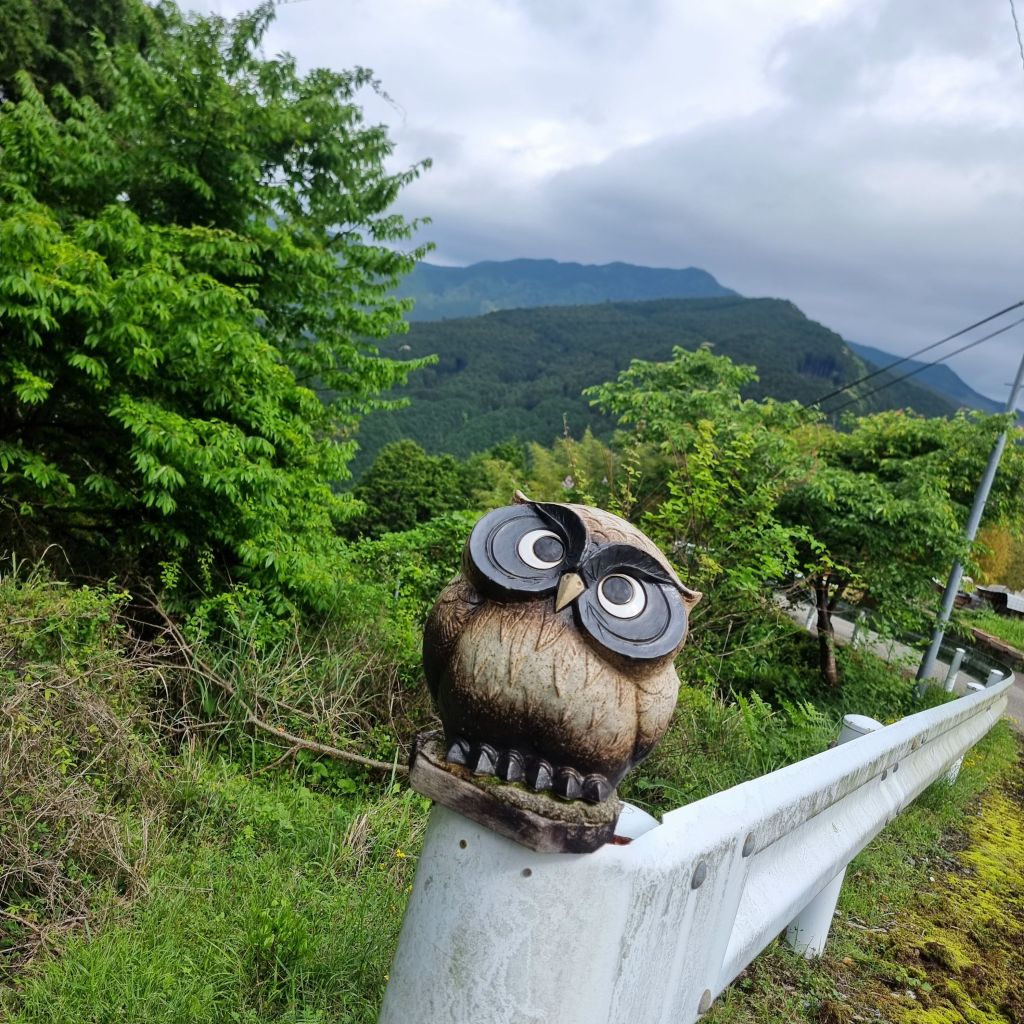
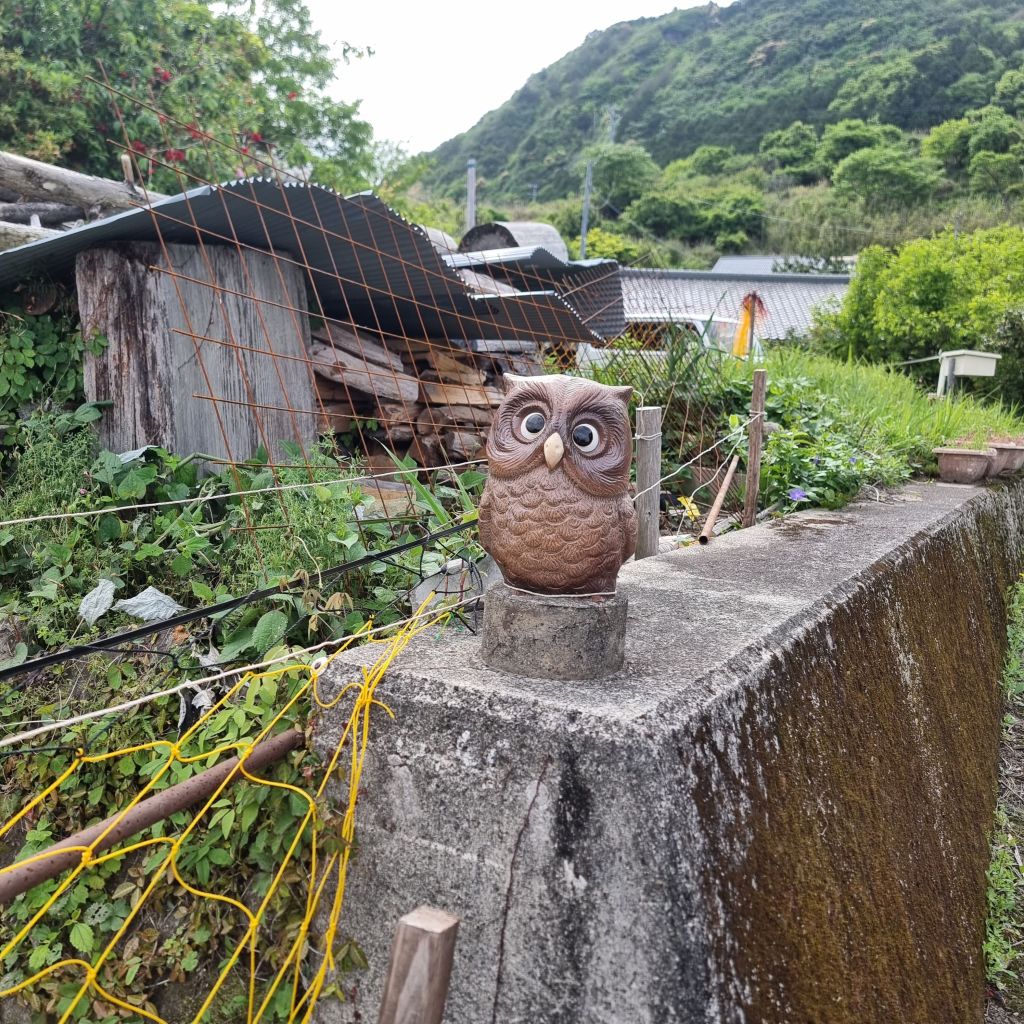
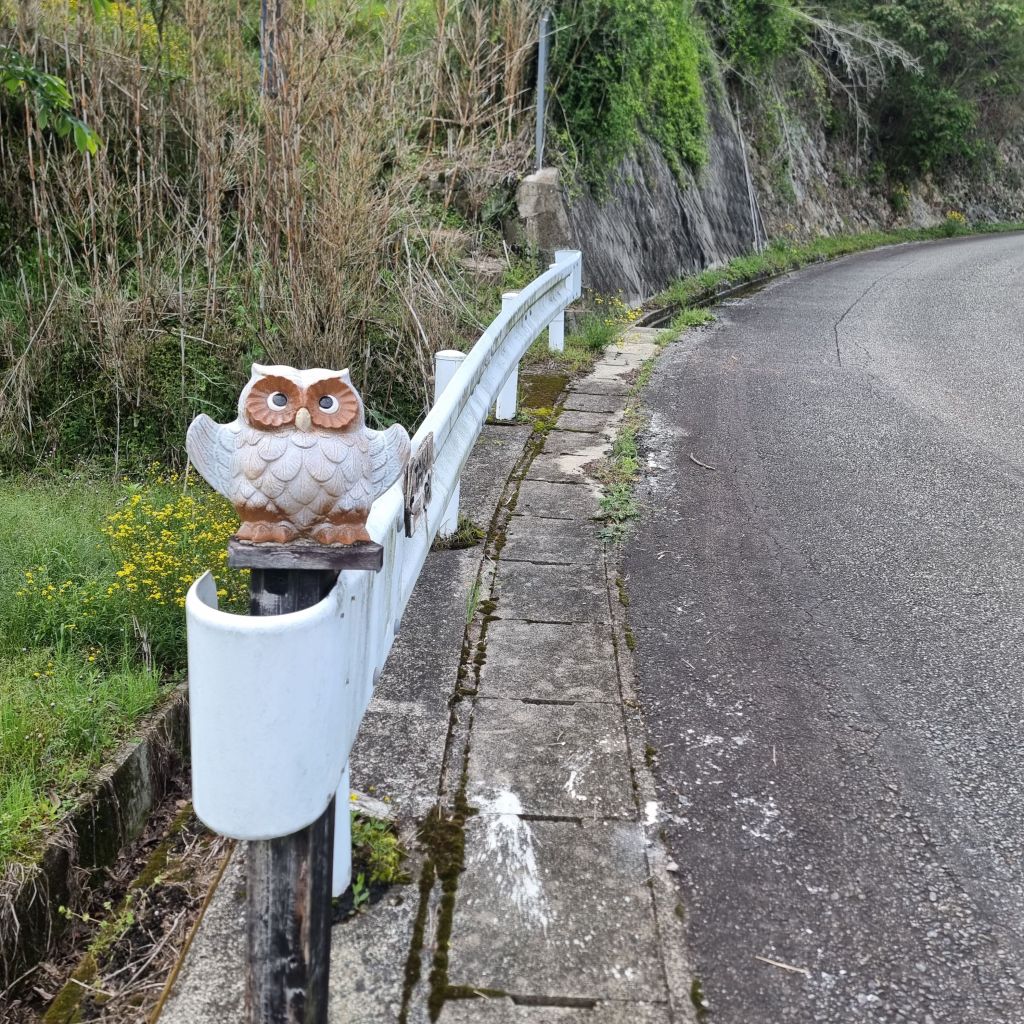
It is with great relief that I eventually emerge on a road, as I’m expecting from my terrible map. Not just any road either. A road that is protected by owls. Up we go.

The shrine is peaceful and heralds the start of the difficult cedar wood prefigured on the map. At one point I find myself pulling myself up a slope with one of those filthy knotted ropes, hoping to hell I’m going the right way, trusting that I am.

There’s nobody behind me and rare reception so I am largely in a state of trust. So peaceful there though with nature. Time to really think. The weight of the pack has eased or my shoulders have improved. Still a lot of work to be done to get my body fighting fit by August. I’m seriously considering taking up a weird martial art as I slide into middle age. Like those pretentious wiry chaps who really want you to know about it. “Ya I’m a SlodiKran JiGin 7th Dan Fongsputter.” It’s the first thing on their dating profile. Could I do it and not talk about it? Hopefully. Vanity…

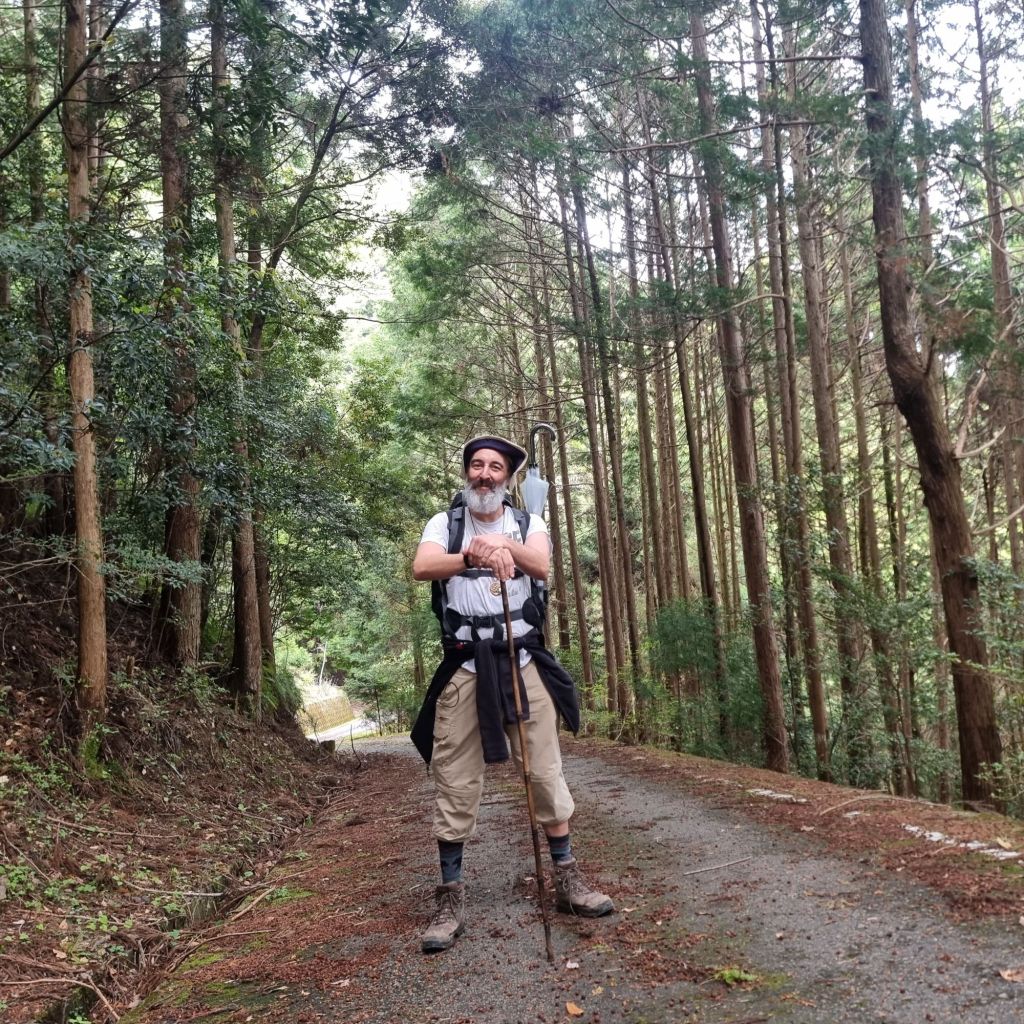
The miles slough away and just before my destination I help a young Japanese woman who is trying to prop her camera on a rock for a selfie. In recompense she takes the first shots of me all trek that are taken by someone good at cameras. A memento. Vanity again. Look at the walking beard, folks.

The guest house is all I hoped for. A working farm, and a loving ambitious project. They opened 5 years ago just before COVID. The wine is plum wine, so I order a bottle of Amarone that he’s imported. He’s Italian. She’s Japanese. They met in Ipswich, of all places. And they’ve made a wonderful thing. I fall into a deep sleep and just as I’m waking from it I am ambushed by breakfast. There’s no way in hell I’m not eating my breakfast NOW. People are running around with plates. I go for a pee and everybody freaks out that I’ve disappeared. I then get hustled up a slope to a viewpoint. Breakfast happens. I wake up about half an hour later with food in me. The breakfast vegetable was broccoli. And tomatoes. And greens. Everything so fresh and grown on this sunny hillside.

She drives me back to kii-tanabe and I’ve found a tree to sit beneath and write.

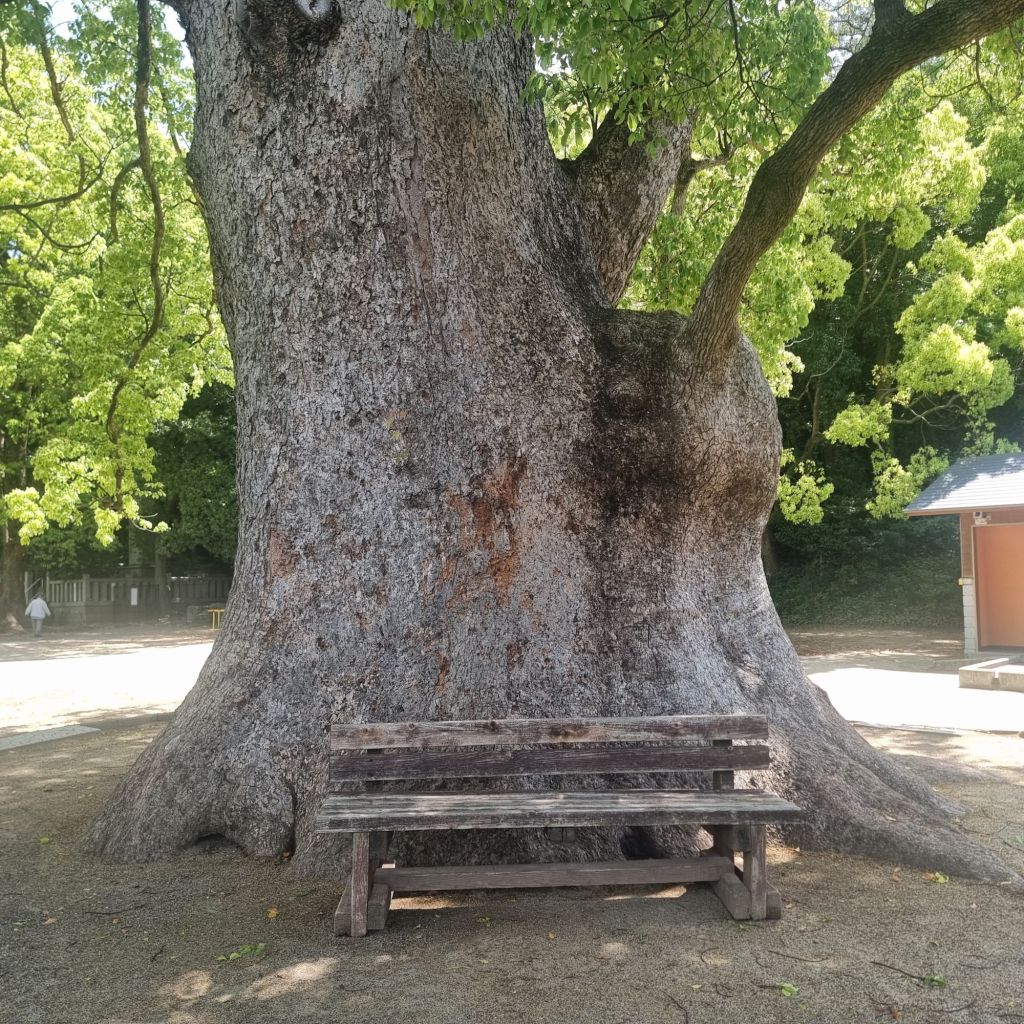
Back to the hustle and bustle. I’m gonna see how long I can carry the piece of me that sat wordlessly and thoughtlessly on this bench for fifteen minutes before it occurred to me that I should get this blog scheduled as it posts in two hours.

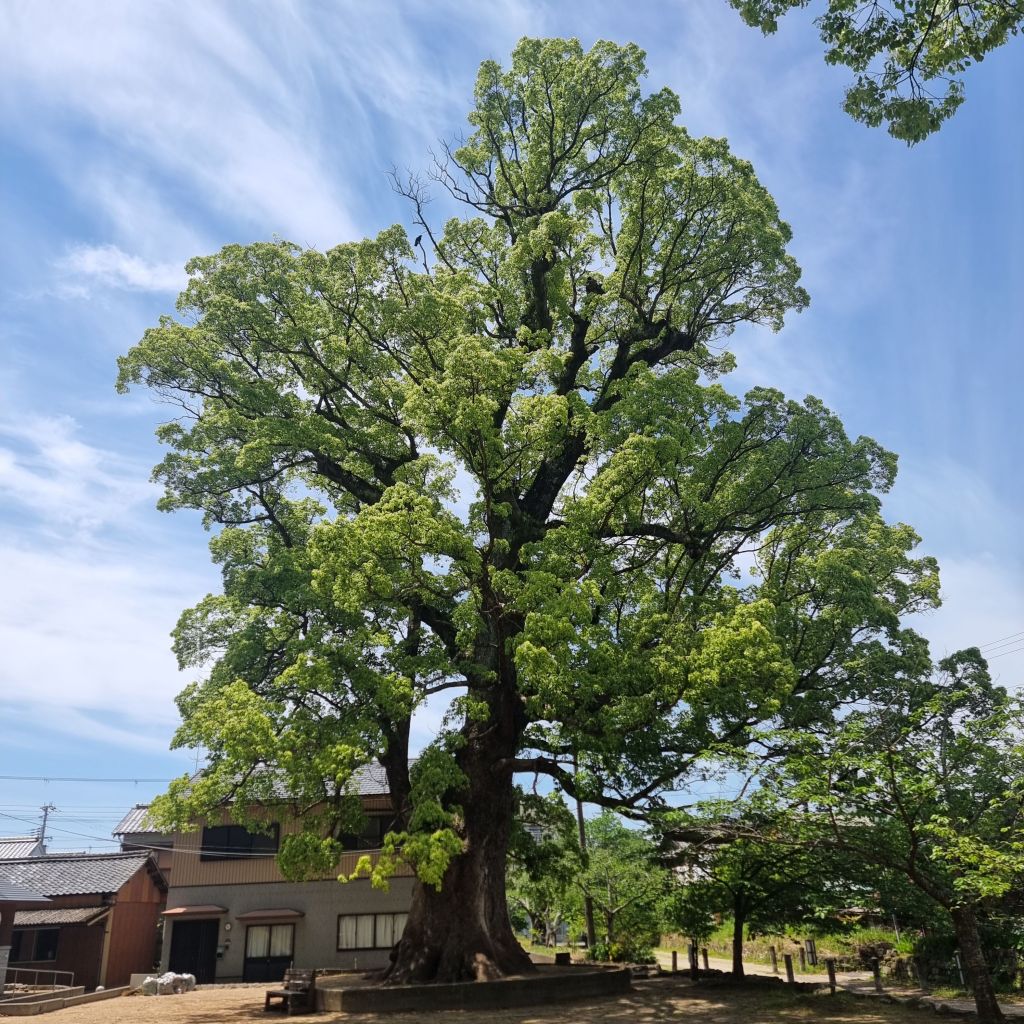
Crow in the top branches. I just broke my stick so I can pack it and bring the wood back. That crow in the top branches started shouting at the crack. Yatagarasu?

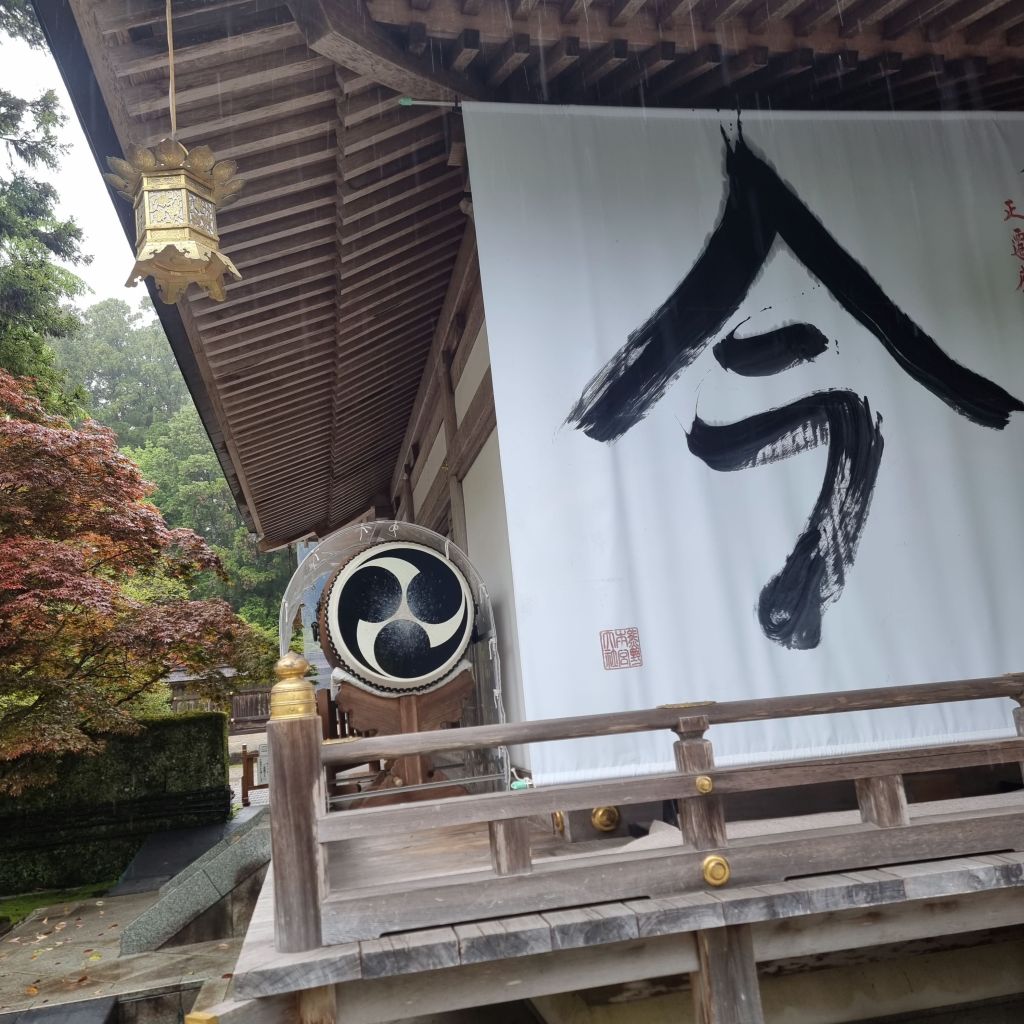
Banging the taiko

After my long walk I woke from a deep sleep and got myself onto the bus back to Hongu. At 8am I was waiting for the priest to finish his morning prayer circle at the Hongu Taisha. A tall skinny young man, he is, with shining eyes, radiant in the ascetic life he has embraced. We speak in mime and I show him my certificate. It is pouring with rain. He walks me over to the shrine. “Shoes” he says. I take them off and walk in socks with him over the “no entry” sign. He beckons me to the taiko. It’s a sacred drum at the side of the temple, good for waking up the kami. Nobody is here but he and I. No tourists yet in this part of the shrine, for the rain and the fact that it has just opened. Just the local kami. And this is the past shrine. A complicated place for me, the past. For us all.

He beats a complex rhythm. It is a touch longer than I expected, and I can see why it is a rhythm connected to journeys. DUM DUM DUM dum dum-dum-Dum-Dum-DUm-DUm-dUM-dUM-DUM … DUM .. DUM .. DDUUMM … …

Yeah, you try and write a rhythm. He hands me the stick. “Now”

I bang it. He seems pleasantly surprised that I’m not an eejit. This drum is only bangable if you can prove you’ve done both world heritage walks. It connects me directly to the last huge spiritual pilgrimage I made, in 2018. It’s why I’ve been getting all those stamps. As I hand the large wooden stick to him, I find I’m welling up. We bow to each other and I go ring and clap to the Bodhisattva in the main shrine, praying as I let the tears come out and not really knowing or minding where they came from. Life is a complex journey. We have to remember to participate though. It’s all very tempting to stay in bed sometimes because it can be hard work, but we only affect things by affecting things. Mohammed was quite right about the mountain.

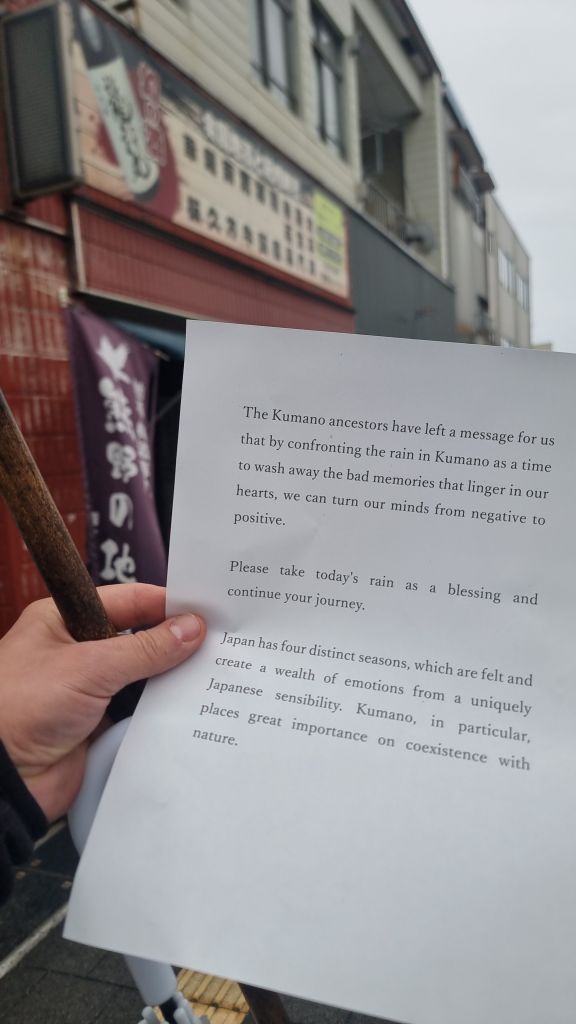
I walked to Takahara from Chikatsuyu in the absolutely pouring rain. No leeches this time but it was relentless and by the time I got to Kiri-no-sato Takahara I was desperate to get in their onsen. I threw my clothes off, put my kimono thing on, and bounded to the shower room. You quite rightly have to clean every inch of yourself before you get into the onsen. Shower for washing, then sit in hot water. I scrubbed and scrubbed and then more or less leaped into the onsen that was, at best, tepid. Very different from what I expected. And yet somehow refreshing. I put my head under, then popped back out, dried off and called Lou. Three hours later it was hot. In my enthusiasm I had got there too early.
Kiri-no-sato has been a focal point for my stay. It’s the first booking I made and then I organised the whole awkward Kumano-Kodo around it. It only has nine rooms and a camping area. All the rooms look out over the mountains and Takahara is gorgeous and quiet. The shared space is busy by Japanese standards but made me feel completely at home. The staff were great and fed me beautifully. I woke up to a view of the valley and the sound of the birds. Perfection. It takes a lot for me to forgive a tepid onsen, but hell it was my fault for being so keen and getting there before they expected anyone.

I checked out this morning and, knowing it is my last day walking, I bounded back up a mountain to see the daimon-oji shrine and the view when it wasn’t pouring. Now I’m halfway back down again, on the way to Takajiri-oji and then back up another mountain to my last night’s sleep. I don’t have to do any of this, and it is hard work. But this is what it’s about. None of us HAVE to work hard. But if we don’t walk up the mountain we don’t get the endorphins from walking up the mountain, nor do we have the experience of walking up the mountain. Be that positive, or negative, it’s life.

Kumano Day 3: Chikatsuyu to Hongu

Up bright and early and I’m waiting at a rainy bus stop in Hongu for the 5:44 bus to Miyanoue so I can head up the road to Nakahechiko Chikatsuyu and start my walk.

Chikatsuyu is a rice farming town, but the gradual rise in pilgrimage as word spreads about Kumano Kodo is breathing enterprise into the people there. It’s barely quarter to seven when I find the path, but a woman in a little wooden hut has been waiting for the likes of me, and she easily sells me a coffee at pilgrim prices.

Around me as I drink my coffee, people with backpacks start to emerge from the little minshukus that have started to pop up along the route. They book out months in advance. Soon the availability of rooms will be greater on this route, and I only hope that it doesn’t start to look like a bin. People like my coffee angel have rightly realised that there’s gold in tham thar pilgrims. But with increased footfall comes increased risk of the sort of louts who have literally turned sections of the Camino into litter-alleys.

I’m one of the first on the path, which is how I like it, although it raises the odds of wildlife. You know when you’re the first as you are breaking cobwebs with your face. When that happens, slow down and switch on. Nobody is in front of you to step on the snakes and scare the bears. That’s your job, cobweb breaker.

It’s a stunning and varied walk to Hongu on this – the Nakahechi Route Stage 2. But it’s a long long way if you take it all in and go up to all the oji – (little travel shrines. There are loads.)

I’m picking my way up to one oji, cobweb breaking, when I hear Mary and Andy down below. Good people. Andy quit marijuana the year before I was born. They have started early too.

I catch up with them and it breaks into a pleasant and conversational start to the day. We flank the fields and paddies as the town slowly tails off and the woods begin. An old man has carved a humorous fountain to flog cold coffee.

Eventually the woods begin again. Much of the rest of the day is going to be about trees. And water. The rain starts up in earnest.

The wildlife count goes right up over the course of this day. Some incredible vast trees, of course.

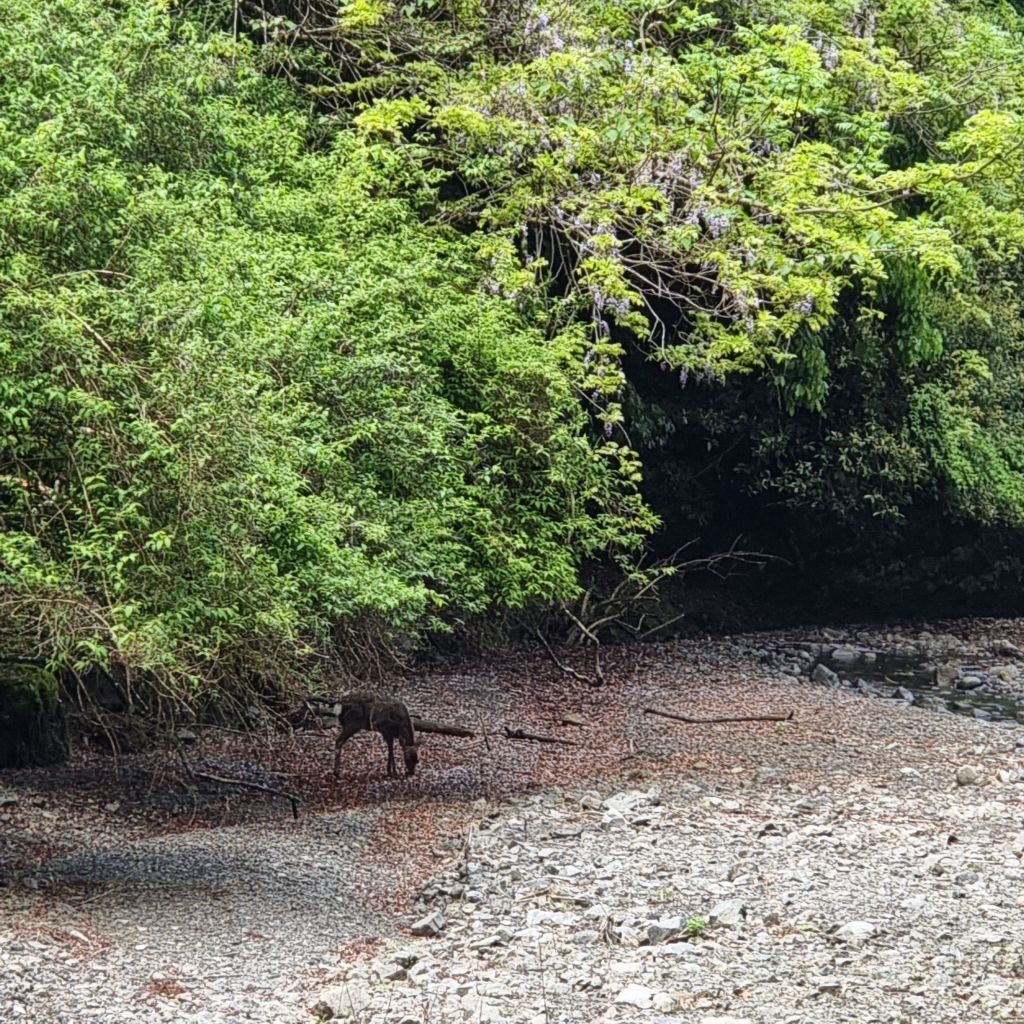
A deer, trying to determine if we were a threat. At one point a crab crosses the path. And the rain brings out some unexpected travelling companions.

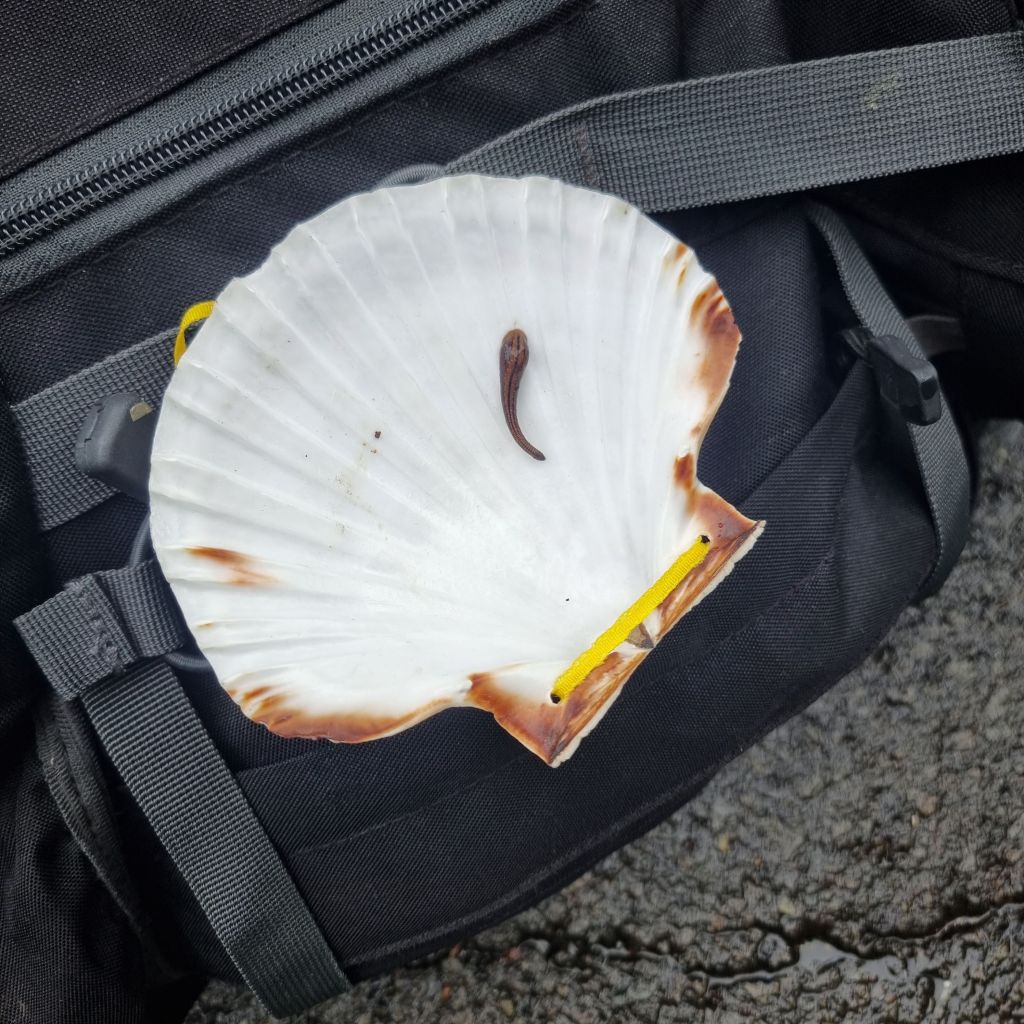
I felt something pulling, and looked down. It took me a moment for my brain to compute it, and now I can tell you how to remove a leech. These are precisely the steps you take.

1: Insult it. My first word, upon computing what it was and what it was doing, was “Fucker”. It remained unmoved, so I repeated it twice, each time more targeted and with more vehemence. Perhaps this weakened its resolve

2: Gingerly poke it. Maybe it is touch averse. If so it will apologise and leave you in peace.

3: Take off your pack and sit on it. Your pack, not the leech.

4: Photograph it. Some leeches are camera shy.

5: Consider your options. “I have no salt. I don’t want to kill it when it is attached. If I pull it off I might have infected bits of leech in me. I could wait for it to finish and then it’ll just fall off… but I really don’t want it on me.”

6: Finally remember there’s a damp box of matches in your pocket. (The previous stages are, of course, all crucial to the efficacy of this method.)

7: Fail to light three damp matches. Start to worry you might run out of matches.

8: Successfully light a match. Burn it until it is red then touch the red bit to the leech.

The first time I did it, I was surprised at how quickly the heat makes the leech pull out and move. I waited for it to move both ends once before I flicked it off. Strange creature. With the rain, by the end of the day I’d met plenty of them.

Wet, varied and beautiful, with the Kumano river crossing back and forth, the path wound out, mile by mile. Some shrines with great strength. I clap at a few of them.

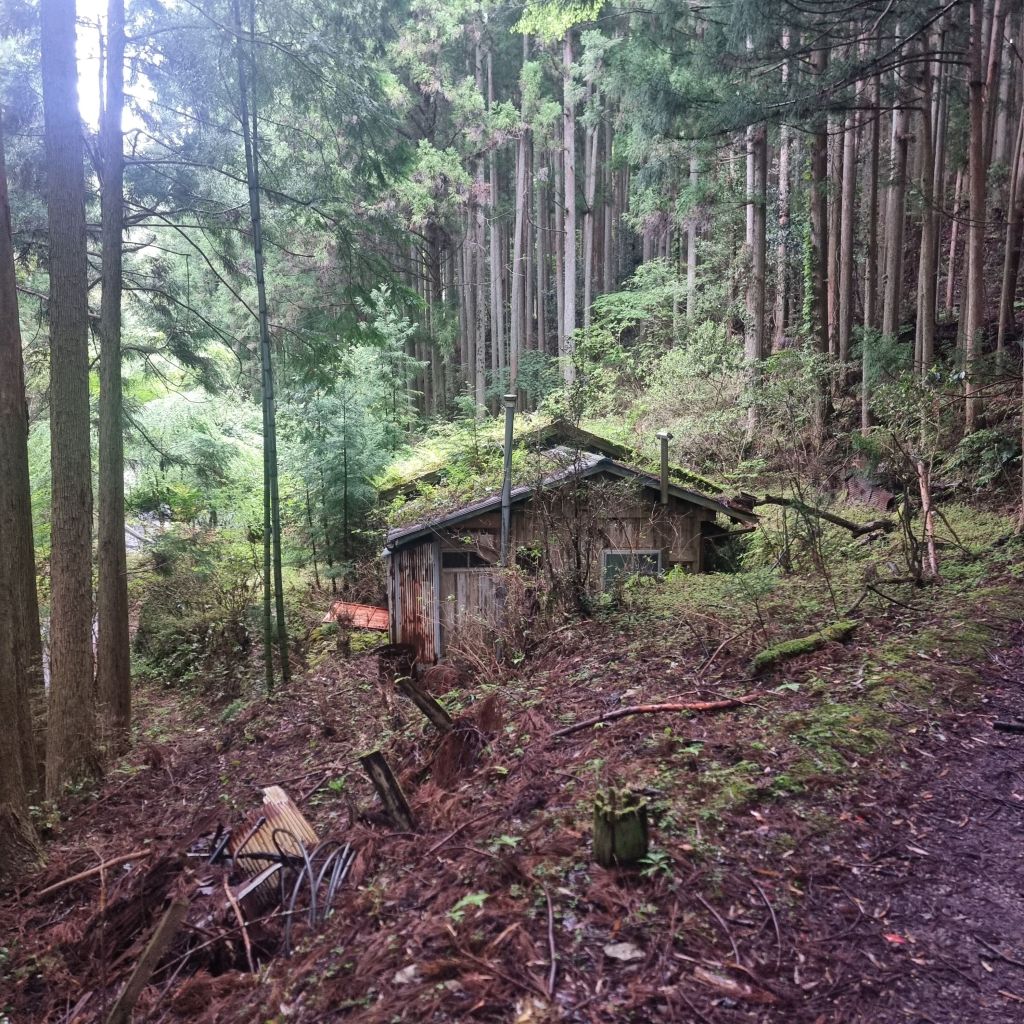
An old house quietly rotting.
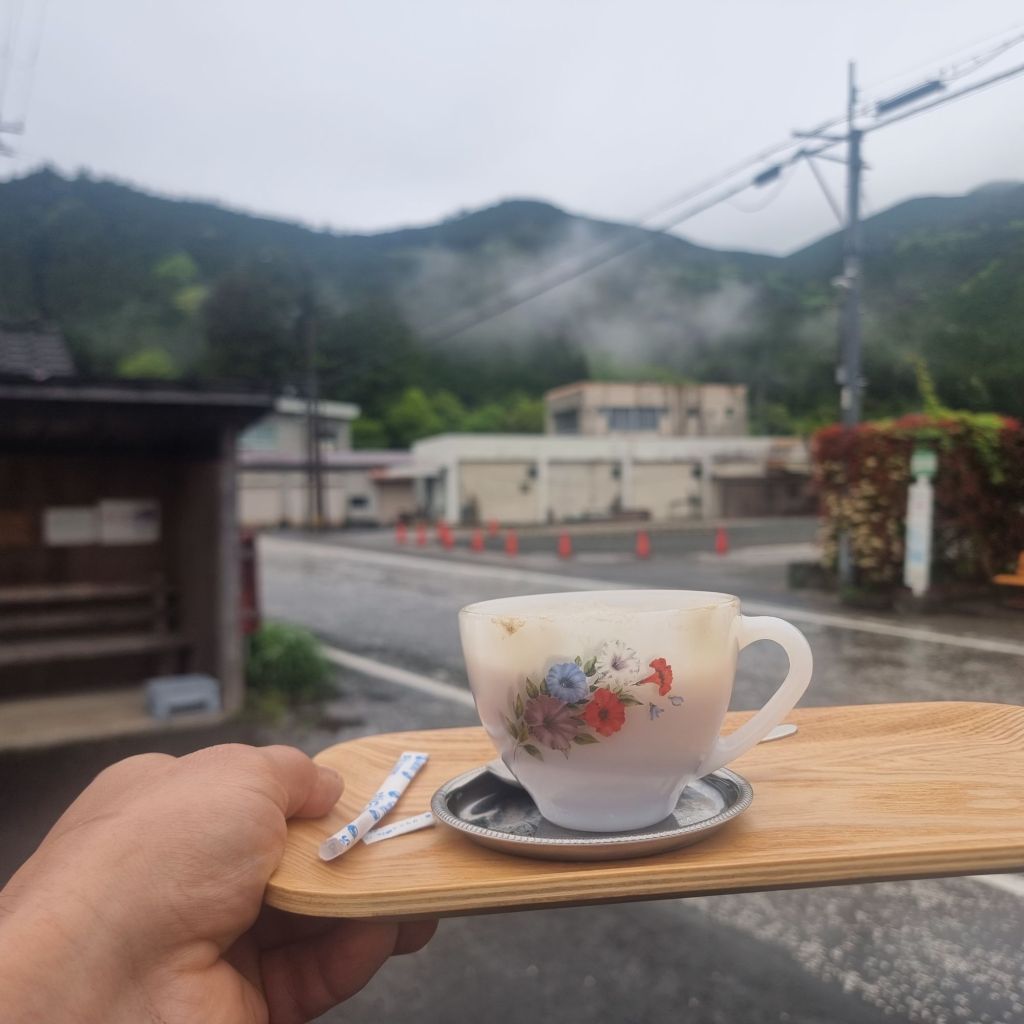
Parts of today’s route were inhabited until 1956, but now once you’re in the woods you are very much on your own with a long long way to a nice woman selling coffee in a china cup.

Eventually, at the top of a hill, I caught a glimpse of the town where I woke up, and the massive torii-gate I walked out of at dusk last night.

What’s the point of taking a bus in the morning just so you can walk over twenty miles back to where you started? Who knows but it has been marvelous and I just had time at the end of the day to register myself at the tourist office as a “dual pilgrim”. I’ll even get a certificate.

Dinner at the ramen joint in Hongu as the bus to Yunomine Onsen wasn’t until just before 7pm. Bus to J-Hoppers, and it’s got brilliant hot springs where you can lock the door, shower, and sit in a pool of hot water coming out of the rock in front of you. I never wanted to leave. It’s still golden week. Lots of people taking the week off.

I was incomprehensibly tired by the time I went to bed. But they’ve already put a piccy up of me with my CERTIFICATE.

Second day of down. Back to it tomorrow.

I’m in my cupboard. Going to experiment with switching my phone off tomorrow as it is a high daily fee and having done the last two days of the Nakahechi route I’m about to do the first two days of it which will be many hours of walking and then sleep and the routes are clearly marked once you’ve found the trailhead. It’s half 8 right now. As soon as this is written I’ll be out like a light with my phone in airplane mode. Tomorrow the bus to Nakahechiko Chikatsu leaves at 5:44. Then I’ll walk back to Hongu and check out the temple. Kumano Kodo doesn’t show on Google maps and there’s rarely reception so my phone is useless on trail but as a camera. It’s only good for buses but it is excellent for them.

After tomorrow all I have left to do is part of the beginning. I’ve stitched this all together backwards and forwards somehow and I’m basically only halfway through even though I’ve seen nearly all three temple and shrine complexes – (haven’t seen the hongu temple). I’ve only got to Hongu by bus though which doesn’t count of course. I was here two days ago in passing, starting the second day of walking. It’s only a 4 day walk however you look at it, although there are many alternative routes that are still called kumano-kodo. This area is sacred. I booked a break in the middle. (and it is 5 days walk in truth because stage 3 that I did with my brolly is a cakewalk and deliberately so in order to try and flog people a boat trip to Hayatama Taisha that almost certainly doesn’t take in the actual shinto shrine. Make sure you get to that and don’t rely on the plague of resellers. The boat probably died years ago.)

None of the finished walkers I met at Why Kumano Hostel in kii-katsuura had been up the Kamikura Shrine. I sent Dom a photo and he was sad he had missed it. It’s not SOLD. It’s no longer treated as part of kk. There’s so much reselling on this route that the impossible hope is that everyone will take a boat but the boats are tiny.

You have to walk weird streets from the temple and then up a crazy steep hill for the shrine, and nobody is there. I had done enough research to book the time in. Most pilgrims either go by tourist boat to the temple and stop there, or they don’t go at all. Almost all miss the shrine. It’s sad. We have this path that used to take in these powerful places. The penultimate part of the path, to walk it, is a road unless you’ve booked a yessirnosir boat to the Ji. Then there’s the mountain path up to the jinja, still intact thankfully, but most people stop at the Ji. (Ji = temple. Jinja = Shrine) (“Go to the Hayatama-ji temple = Go to the Hayatama Temple Temple”) (I’m as confused as you are.)

Nobody walks the road bit. They either pay someone in a hat for a boat – and actors sometimes connect deeply with such material so it might be wonderful – or they don’t go at all. There’s a train. There’s a bus. But after the waterfall it is a sad walk down a main road for hours and I wouldn’t recommend it.

At the bottom of the hill at the Kamikura Jinja yesterday I went to an obscure secondary shrine just because and I met a woman dressed as a nun. I observed shinto and then gave her space, worrying she was judging my unconvincing bows – (They’re lip service. Spirits don’t care about hierarchy).

“Don’t worry, I’m not actually a nun,” she suddenly told me in excellent English. “I have a tour group coming through soon and I need to be dressed as a nun.” Kinda sweet of her to be like that. She seemed a little nervous and I think she wanted to practice her English.”I am sure you will bring wisdom to the people on the tour as if you were a nun.” We spoke for a while, thanks to her language. I left before the group came. She’s the first actor I’ve met and her heart was in the right place. But … there are coach loads of tourists here, that don’t walk at all but flood the shrines and book out the boats and get panto from the likes of her. You can walk all day without seeing another soul but get to the shrine and it is full of people who came by coach led by people dressed as nuns. So far so Macchu-Picchu by train.

It’s nine. I’m gonna crash. It is HOT in my cupboard tonight. Top bunk.

This evening I popped down to the biggest torii in Japan. I’ll be back there officially once I’ve walked to it officially. So far just buses hence no pack.

Most of the day was taking my luggage back to kii-tanabe and then getting myself back to hongu on the bus. Logistics for this trip have been hard. But it’s all fallen into place nicely so far and as long as I get this bus tomorrow morning I’ll be golden.

So zzzz

Temple, Shrine then solitude

Today a much shorter walk, just to Kumano Hayatama Taisha in Shingu, then down the road a bit and up a mountain to the Kamikura Shrine.

I got my calligraphy all nicely done at the temple, but didn’t stay long as it felt strangely sterile. As always, the real power was at the shrine. Nachi was a waterfall for the present. Kamikura is about the future. It’s a rock. A solid point, but you have to work hard to get to it. Right up the top of a steep steep hill. As I go up, lots of people are coming down on their bums.

The shrine itself is a huge rock overlooking the town, with the inner sanctum as a vagina of three rocks. It’s powerful.

I spend a good amount of time at that shrine, praying to the rock yoni, and I blow my plan of buying presents today – there’s no shop. Then I have to run back down the steps as I’m getting a lift to my next accommodation from Kii-katsuura and I have to catch a bus. Thankfully I don’t go arse over tit, but people look at me disapprovingly as I run away from the future again while they shuffle away from it on their bums.

I get back just in time for my bus, and I’m driven up into the hills. This is a scheduled rest stop now and a chance to recharge.

My host tells me through Google Translate that there is an ancient shrine nearby. He takes me there and it is another rock shrine. This one is dedicated to Hachiman now, so the shinto animal would have been a dove.

“This is not the shrine. It is only about 120 years old. Look, the tree will fall on it soon.”
“This huge rock. This is the true shrine.”

I flick an old Georgian penny into the brook below the rock and clap my appreciation of the incumbent spirit here. My host approves. Then we drive back up the winding mountain pass to my place for tonight and I know I’m going to rest well.

A little wooden hut in the hills. A kitchen. A bath. A view. I spent the evening cooking things for my next couple of lunches, listening to the birdsong and thinking about how lucky I am. I’m coming to the end of this first tester journey and walk in Japan and there’s no way in hell I’m not coming back here. I’ll have to find time to walk Shikoku 88 temples, and this time I’ll plan it way in advance, although my choices at short notice so far have been satisfying. The next 4 days are logistically much more complicated though. I’m on a train to kii-tanabe at the moment to see if I can leave my wheelie case in left luggage there for a few days. Then I’m gonna walk a short steep ascent, the very beginning of the Nakahechi route, from Takajiri-oji just as far as Takahara. Logistically it might be the only chance I have to cover that part of the trail. I’m feeling pretty good for it, even though I stubbed my toe horribly last night.

Hongu to Koguchi

When planning this route, the Japanese specificity really didn’t help. I walked from Hongu to Koguchi. The trailheads are in Umezawa and Kowaze. So when you’re trying to plan the fucker, your head starts to explode when you actually get people saying “It doesn’t start in Hongu, actually. It actually starts in Umezawa actually actually I think you’ll find.” Sure if you need to meet someone say “The Art’s Theatre” not “Leicester Square”. But either will do if you’re planning a walk. Go with the bigger one.

I woke up in the morning and spent two hours on buses to Hongu. Then a very valuable drop into the tourist information centre to make sure I was hitting the right trailhead, and forty five minutes walking down a main road – crucially ignoring a Kumano-Kodo trailhead that isn’t at Umezawa and goes the wrong way. Which I imagine is why people feel their pedantry is justified.

I have time pressure today, as Koguchi *ow* Kowaze is not well served with buses. My last one leaves shortly after 5. A late start means I can’t take it too easy. But I’ve been told this section is pretty chilled. Yesterday was Nakahechi Route Stage 4. Today was stage 3. “You’ll do it in 5 hours I reckon,” says Dominic. And he’s right. But I don’t trust it so I’m yomping.

An Englishman in Kumano, it would be madness not to bring an umbrella, I tell you. I’ve got a little one sticking out of my pack and when the heavens open I am very proud of myself for that. It’s an easy trail, the views are supposed to be wonderful. But I’m in a cloud, and I’ve seen plenty of ancient cedars by now. The nightingales are still bravely trying for call and response. I put one foot in front of the other.

Hyakken-gura lookout is a rare moment when the trees are clear and you can see for miles. “Take time to admire this glorious view, as pilgrims have done for 3000 years!”

White is resonant. The spirits have laid on a white view to reflect back on those of us lucky enough to have walked this section today.

I know I shouldn’t be wearing cotton. The rain will make it cold. The mist though – it gives an atmosphere. At times I stand in awe, listening to the sound of the forest. One moment I worry I’ve got stuck in a loop as a bridge seems to repeat itself. I have to check my photos and the trees around it to be sure it wasn’t the same bridge twice.

Maybe I momentarily shifted time
and then shifted back and stuttered up the path

Plenty of time to think with the world so quiet. I’m occasionally talking to myself, working through things I’ve been bad at looking at.

The miles peel away in the mist. I’m hot enough walking that the wet t-shirt isn’t killing me. No lunch though today. For some reason I don’t want my cheese. I just have an orange and some rice crackers.

Someone used to live in one of the teahouses until 1960. I find myself envying them. The nightingales at night. The absolute solitude, and this particular teahouse ruin is not a hard walk from either trailhead. You could get a mule. Keep chickens. Live a peaceful life. Flog hot tea and rice cakes to pilgrims.

Koguchi just happens. Kowaze actually, I think you’ll find Koguchi is two bus stops down the road to the right after you’ve crossed the river.

I wait for a bus. Then there’s another bus. By the time I’ve got to the third bus stop I’ve spent almost as much time on buses today as I have on the path. I go into a little Sakē shop by the bus stop. It’s really just to have something to think about other than being hungry and bedraggled. I pick up and put down a few bottles, and smile at the owner but honestly I’m not here to buy sakē. I return to the bus stop and a few minutes later the owner comes out and gives me this:

By the time I’m back at the digs I’m exhausted. I try to go shopping a bit, grab a snack, and go and pass out in my cupboard.

Koguchi to Kumano-Nachi Taisha

Misty but not raining, and by the time the bus gets to the trailhead there are twelve other pilgrims walking the same way from Koguchi, so we string out onto the trail. This is the fourth stage of the Nakahechi route, and it’s considered to be the hardest walk.

It’s pretty easy to find the trailhead, particularly in company. There’s a little box for a stamp, where someone keeps the ink refreshed. Some of us stop, others are totally over the whole stamp thing by now. I think it’s cute so I get one, and Mae tells me I am stupid for not having walking poles, and that my T-shirt is cotton. She’s half my size and twice my age. I smile and show helpless hands. She smiles back and starts swarming up the hill. I never see her again.

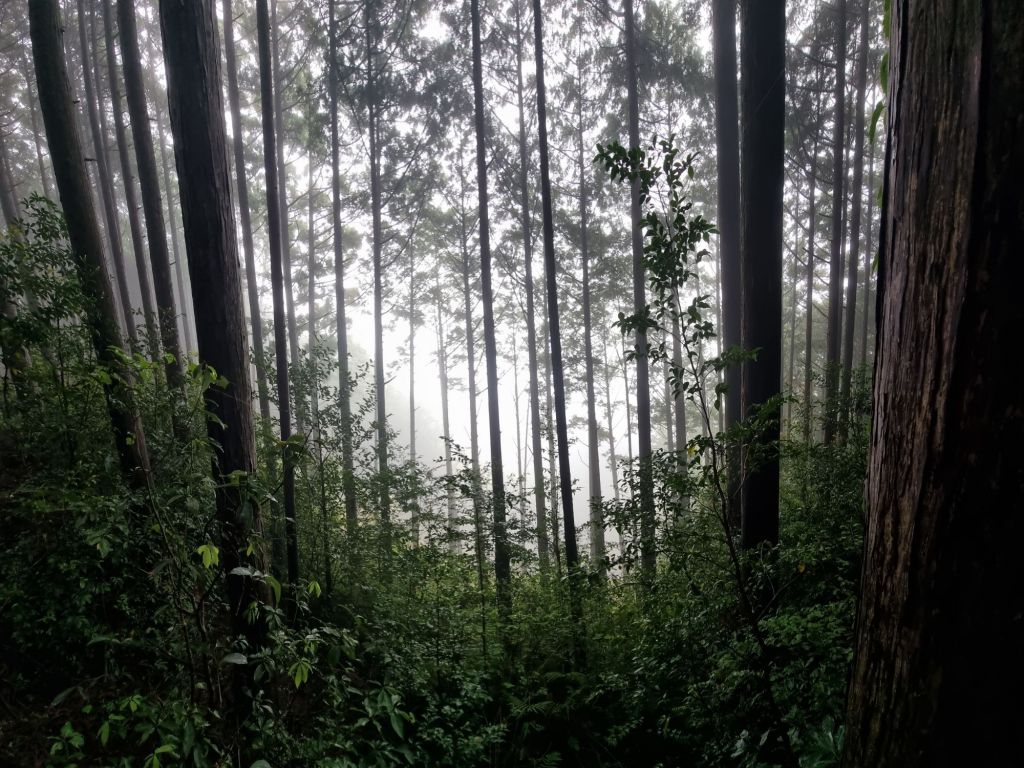
The trail goes up into the clouds, over boulders that have been there for thousands of years, some surely dropped by glaciers, and through tree roots that will be shifting and probing, holding up the long straight cedars that line this ancient walk.

It is quiet here. The rush of water when there are streams, occasional woodpeckers, the calls of birds. I have been promised leeches and snakeses and bears, oh my. I find I’m disappointed at the lack of wildlife. Beautiful spiderwebs. A large ichneumon wasp lands on my arm with the long ovipositor that everyone mistakes for a sting. Nothing unpleasant all day.

This walk used to be busy, right up until 1920 there were people who lived here running businesses. “Bath is ready. We have tofu”. Roads killed it off and very little remains now. I’m glad that there’s only one rest stop with a vending machine and a loo. And nowhere to stop and sleep until it’s finished.

Up and up and up. My Fitbit is very excited by the exercise I’m doing. I am less excited but there’s only one way I’m going.

Fujiwara Teika:

Fleeting, indeed, are
Dew and tear drops, both
Unceasing;
She loved
This house, where Autumn winds blow now.

In 1210 the poet and wordsmith wrote: “This route is very rough and difficult; it is impossible to describe precisely how tough it is.” He sounds pissed off. It’s beautiful, Teika me old bean.

Up and up and up. My trousers can convert to shorts so I convert them. I’ve found a stick now. It’s not perfect but it’s a stick. And up and up and up. Sweat swamps my back and I’m not even carrying full pack. Why did I take the books? And up and up and up. I’m hoping for a shrine as it’s an excuse to kneel down and clap and get my breath back and up and up and up.

There must be a heck of a view but I can’t see it. I can see the path. Moss making things look more ancient. I can feel the ages in this land, in these sounds.

We are walking to Nachi Falls today. In terms of the purpose of this stage, it is to find peace with your present. The falls and the shrines there are all to do with the present moment. The longest single drop waterfall in Japan hitting the ground and that endless forever changing flow of water reminding us that now that now that now that now

I have to get there first though. Not there yet ha ha. “I like your perspective on this. Loads of people just think it’s a hike.”

At the top is it the top it says it’s the top at the top two Italians are waiting. “Have you seen a Canadian?” They have his lunch with them. “He’s a way back but I’m stopping so I can guard his lunch.” I sit in the quiet and I think I hear monkeys but they don’t steal his lunch. I peel my orange peacefully. An orange at 10000 paces. An old tradition from Camino and one I’ve brought back as it’s glorious. And I meet Dominic the Canadian. He’s steady and inevitable in pace. That’s about where I am unless we go downhill where without poles I’m mostly running and grabbing trees to catch my speed, plotting the safe path with eyes that learnt to ski as a toddler.

Finally there’s a view. Nachi. Where I’ll be sleeping. This is the land of the dead. You might be happily strolling down after a hard ascent, and you might see an old friend coming up towards you. You wave and they vanish. You get home and discover they died. Everyone has to go up this mountain when they die. It’s how you get to the next one. I’m happy not to see any old friends. I catch my breath and look at my accommodation.

In my usual manner I’m picking up and dropping things all the way. I put a Camino rock on that stump. Now I’m loaded up with unusual things that caught my eye as I walked and they’ll all end up somewhere else or charging up on my altar back home.

I run down the hill to the shrine. “It’s easier on my kneeeees” I tell the Australians as I pass them. “No it isnnnnnt” one of them reminds me but I’m too dumb for clever.

And the shrines. Loads of smoke. Buddhists are good at stinky smoke. It’s one of the reasons I like them. I’m a big fan of stinky smoke too. Big wooden buildings with bells. I really really really want to ring the big bell but there are certain things that are restricted to the tour groups who are paying more. Like special wristbands at Punchdrunk. Like the botafumeiro at Santiago, the largest censer in the world that only swings when someone has donated loads of money that day. I consider doing it anyway but my feet are too tired to run away from angry monks. I do desire a BOIIING. I think I’ll get to bang a particular drum at Hongu because I did Camino as well and I get a little dual pilgrim thing.

The shrine is good up the top. The 850 year old sacred camphor tree is as powerful. I take a leaf from it when nobody is watching. I ask it first. I resist buying tourist things. The present is my favourite state, my last Camino was for the past, this walk feels like it is for the future, so I’ll buy my tourist stuff at the future shrine, at Shingu.

As is standard with Buddhist Shinto syncretism, the shinto shrine has been incorporated. And it is the deeper and older power. The waterfall for the present, of course. No need for a shrine, but you pass through a torii gate at the top of the stairs.

These gates are everywhere, marking the boundary between sacred and profane space

A tour group goes out onto a special platform and a man in a hat plays Simon Says with them. They all clap and blow and put their hands on their heads because the man in the hat tells them to and it looks so empty but they paid for it. I chuck a shiny thing into the pool, wake up the sleepy kami, thank it for a lovely Present and watch the water turn around and around shifting, unpredictable, vast, wonderful. I love that the waterfall IS the shrine. Why mess with what nature has provided so perfectly?

I’m doing this all backwards and forwards, but I’m doing it.

Walking finished, Dominic and I ate wonderful sashimi together. The slight downside of launching from kii-katsuura is that most people sleeping there have just finished so they want to celebrate. The Aussies get involved, a lot of beer is consumed and I actually have to pull away and go up to my cupboard and pass out. Now I’m on the bus to Hongu, well rested, ready to walk from Hongu to Koguchi, hoping I finish the walk in time for the bus home, hoping it doesn’t rain too hard. It is noticeably colder today.

Final day before walkies

A long long train journey round a nub of coastline from Kyoto to Kii-Katsuura. This was supposed to be my launchpad, and it will be, but my first problem comes with the fact that I’ve booked everything backwards. Nobody else is doing it this way so there’s no infrastructure in place for us to do it this way, I tell myself as I sit on the road at the bus stop in Shingu just after dawn watching the hawks.

Then Mae arrives. She’s doing exactly the same thing as me today for the same reason, but was able to get a minshuku in Shingu. I had to book in Katsuura and taxi here. She’s from Taiwan. “I thought I was the only person to have thought of this,” she says laughing, and I tell her the same. The two of us are the only people on this bus. It’s an inelegant workaround, and it’ll be over £100 in taxis by the time I’m sleeping somewhere else. But I’m way too stubborn to let a little thing like logistics get in the way. I’m off into the hills. Hooray!

Last night was a tuna extravaganza. I booked an expensive meal at Wakatake. It largely involved tuna as that town seems to be where they haul a lot of it out of the ocean. I sat cross legged and ate my own bodyweight in fish. I’m full of protein and ready for the trail now, although maybe I should have said no to the Sakē. It was so good though, and didn’t seem to affect my ability to get up this morning.

Just a little bag today. That’s the advantage of the workaround – I won’t need to walk with my pack. I’ve got lunch, my books for stamps and a map book. Contact lenses. Flask of water. Not much else. I’m wearing Charlotte’s hat. I thought I’d given it back to her but found it when I was packing. Thanks.

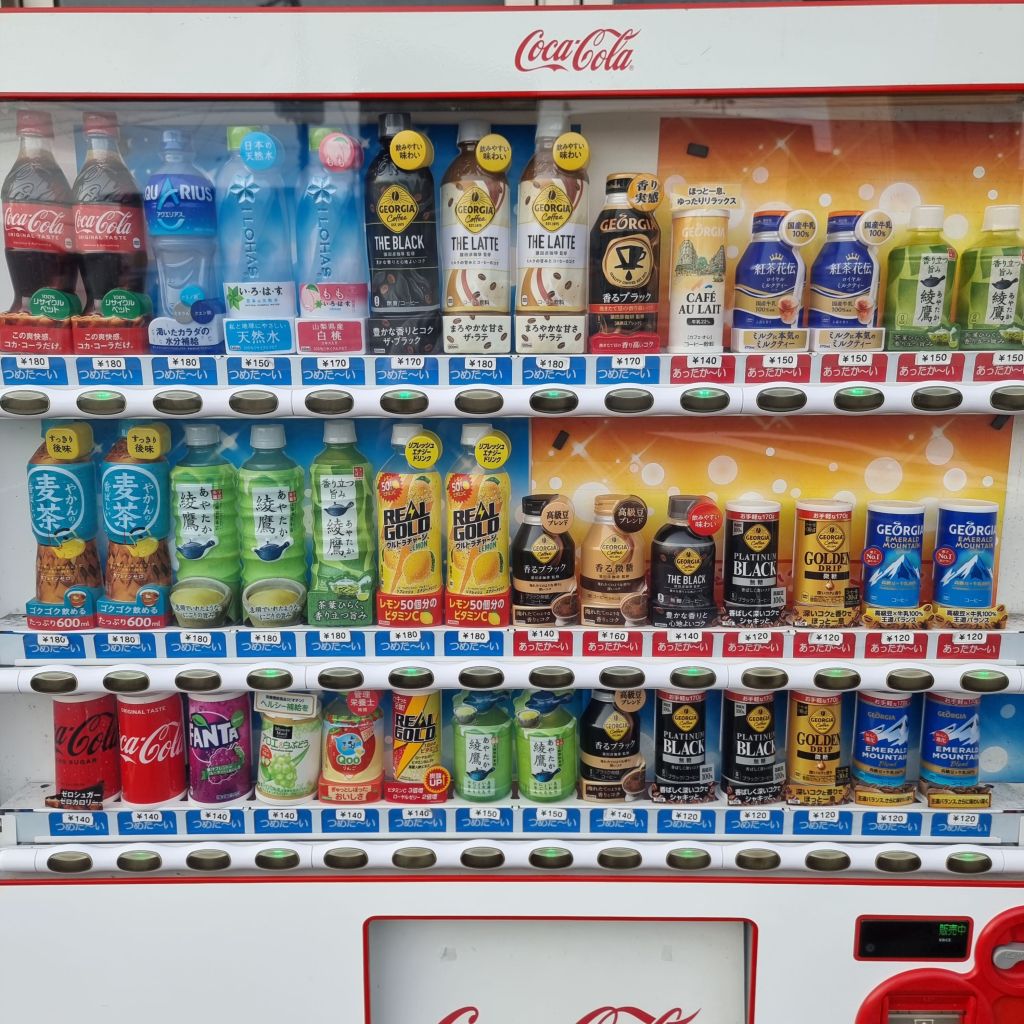
This is rural Japan now, and I’m going deep into nowhere. The view from the bus even is astonishing. And thanks to the vending machine culture, I’ve already had a hot coffee before 7am in a tiny little town.

the red ones come out hot. it was a surprise to me

I’ve eaten well enough the last few days to last me the rest of my life. Now I’m gonna get hot and sweaty and plod my way through these beautiful mountains looking for whatever I’m looking for and getting whatever I get. Gonna conserve battery and look out the window now.

Tuna collar
Bluefin. They gave it to me to say sorry for messing up my order slightly. I would never have ordered it, but I’m happy to know what it is like.

Mt. Inari

Having established online for certain that the woman at the fourth queue misinformed me about my pass not being valid to Hiroshima, I am relieved that she was so adamantly wrong. I stayed in Osaka instead, and eventually my peregrinations took me to the Fushimi Inari Shrine, and from there up the slopes of Mount Inari.

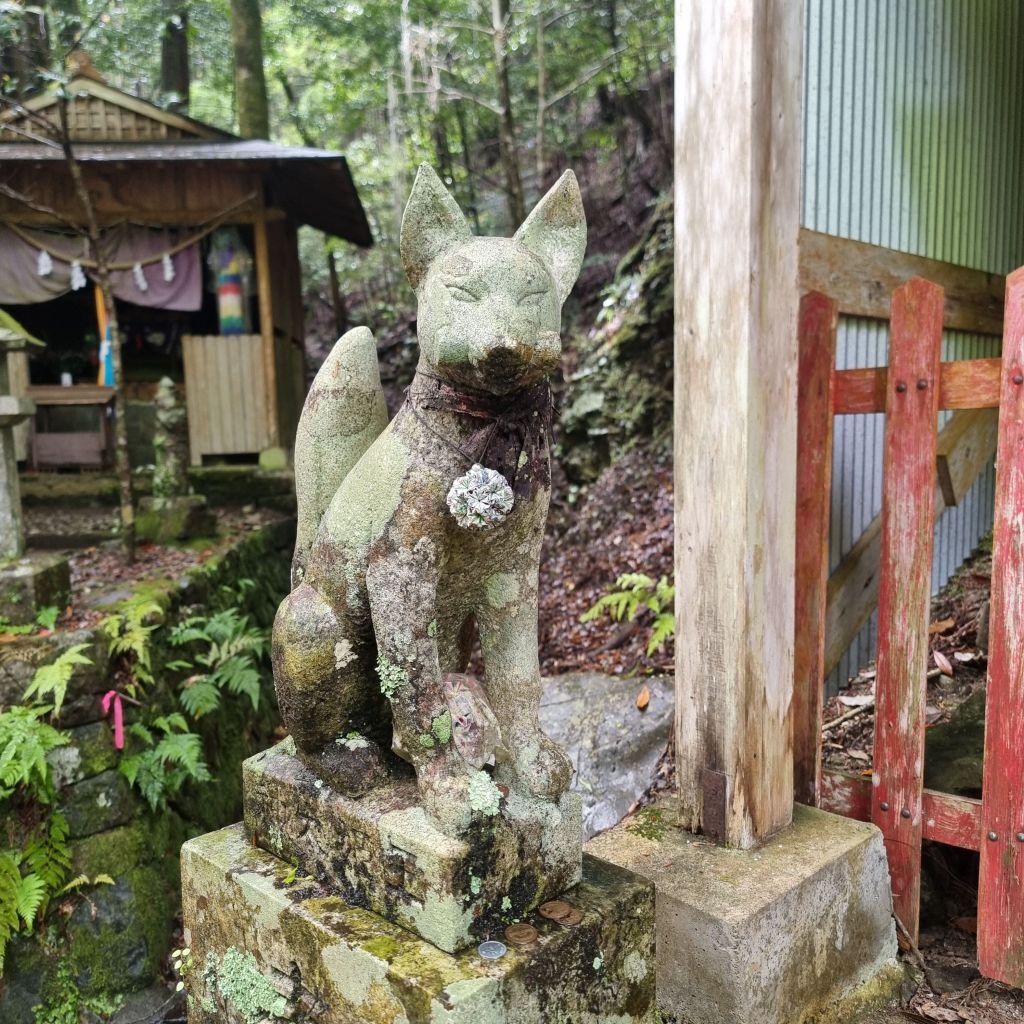
The blog my iPad lost was all about Inari. People have tried to make Inari look like people because there will always be narcissists, but Inari is a fox spirit and has loads of friendly kitsune helping out. Inari deals with harvest – (and the performing arts). He’s a big fan of rice cakes and tofu. She had the shrine next to my first digs, and on the first day I didn’t have any coins with me so I offered him a Victorian collar stud, a shiny ball and a plastic rabbit. I think she liked the rabbit and the ball, but the collar stud…?

OK there was a shrine keeper there. Maybe they go through all the offerings and maybe they worked out that the stud was from the gaijin staying next door. Maybe they then spoke to my hostess, let themselves into my bedroom, and left the collar stud on my pillow. Right? That’s the rational explanation. Because the only other option is that Inari gave it back. It was on my pillow when I got home. It took it in my stride at the time but the more I thought about it the weirder it felt.

Now it’s in my shirt top buttonhole. It wasn’t a rebuke, the thing coming back. The stud is white, the colour you see Inari and the kitsune painted. White like rice. Maybe Inari charged up my collar stud and then sent a quick kitsune to drop it back on my pillow as a surprise. By the time it came back they’d had a few coins off me too, as well as the shiny ball and the rabbit, so they couldn’t think I was being stingy. And they’d had some company. That shrine out in the styx – it’s strong but not well attended.

Maybe the shrine keeper dropped it back in contempt. Maybe it was another collar stud that somehow came out of my bag where they are all still hooked to card. However it got onto my pillow, I’m taking it as a positive thing to have it. I do have other studs so human error is possible. Still, I’ll restrict my box offerings to cash, and leave my random things elsewhere, and the remaining studs are all gonna get left overnight at various shrines to see if I can repeat the experiment, and charge them up with various friends.

Mt Inari has the Fushima Inari Shrine at its base. It was a bit human conveyor belt down there and as I was going nose to tail with all of Instagram I noticed a little path off to the side that nobody was taking, so I took it.

The little path winds up the mountain, past legions of ancient Inari. I think it might be how they marked graves, but most of them seem to be clean shrines, radiating power. I took the path close to dusk, just as the rain was starting. I barely saw another soul on the way up. Just an ancient couple tending the most incredible complex of old shrines – absolutely rammed with frogs as well. Their sound was so loud you could believe it was electronically wired for sound. (it wasn’t). I bought all their incense at Y50 a batch. That’s about 25p each. And it’s gorgeous stuff. She gave me a free box of matches. Now I have fire.

By the time I got to the top I was hot but soaked. A steady rainfall all the way, but I was so happy to be there that I didn’t mind. I left a bit of Jersey granite with one of the old ones.

Spot the orange granite

I don’t resent the woman at JR for thinking I had a different pass from the one I have. I’m just sad I lost those morning hours to a queue. It was a lesson though. Today I just got on the train. The pass lets me through the barrier. The guard knows the pass. So long as I know I’m on the right train, the fact I haven’t got a reserved seat is irrelevant.

I’m off to Nachi-Taisha, via Kii-Tanabe. Inari Mountain was a warm up. I’ve got to think about left luggage now, and stripping back what I’m carrying, and getting up even earlier… I think I’ll have to leave my case in kii-tanabe and pick it up just before I fly.